Error: Contact form not found.




The Vietnam media landscape is currently defined by a stark contrast between historical investment patterns and modern consumption realities. While traditional television remains the largest single recipient of media spend for FMCG* brands, its efficiency is rapidly declining. A meta-analysis of five Marketing Mix Models (MMMs) conducted by Analytic Edge reveals that TikTok has emerged as the most efficient driver of incremental volume in the digital mix.
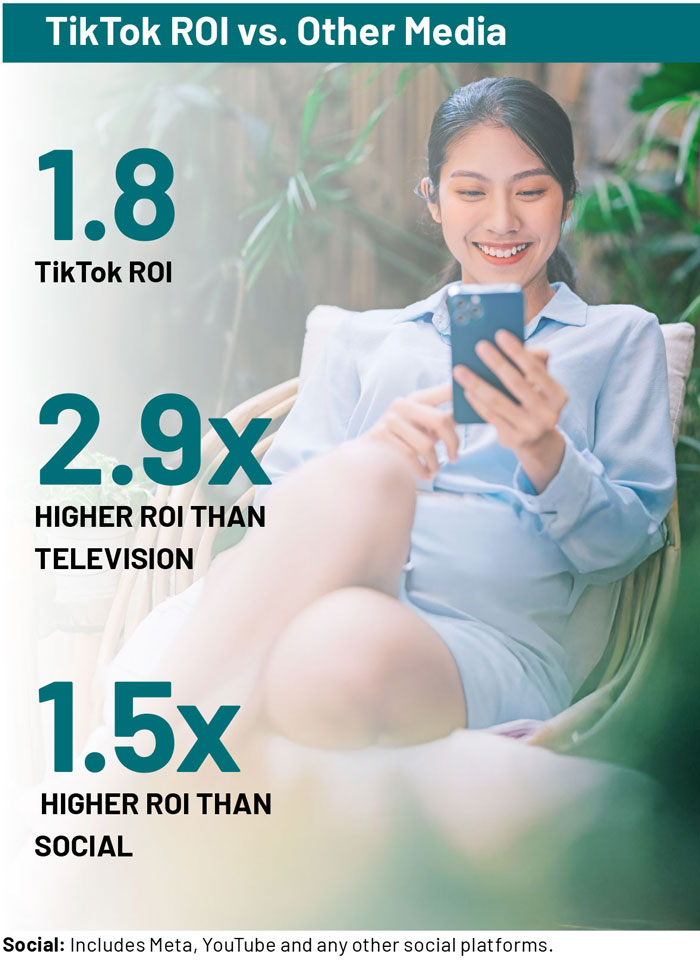
With an ROI of 1.8**—surpassing Linear Television (0.7) and matching other social platforms (1.8)—TikTok is significantly under-leveraged in Vietnam. TikTok now drives the highest ROI (2024), significantly improving its rank compared to 2023 when it was slightly behind other social channels. This clearly demonstrates TikTok’s increased efficiency in driving revenue and proves its growing impact on the media mix.
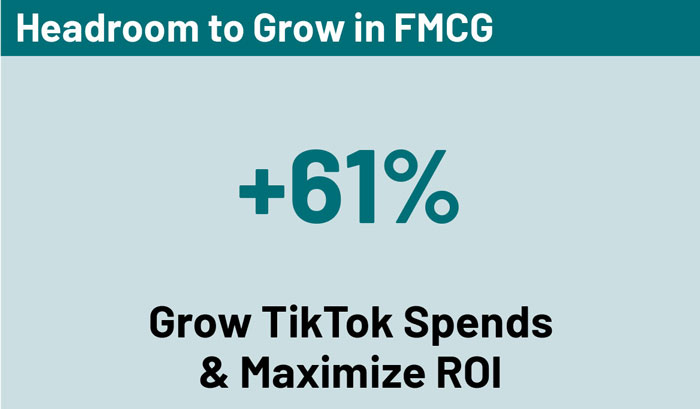
Having already doubled in share of wallet terms in the last two years, the platform still offers a significant growth runway, with an average recommended spend increase of +61%. When accounting for the “Halo Effect”*** of social commerce, the “True ROI” of TikTok is estimated at 2.0, positioning it as a critical engine for total business growth in 2026 and beyond.
*FMCG includes CPG advertisers who are not in the Food & Beverage (F&B) or the Beauty & Personal Care
(BPC) segment.
**TikTok ROI 1.8 in 2023-2024
***Halo Effect: When TikTok Shop ads helps drive sales in other e-comm platforms or offline channels.
Vietnam’s media market is undergoing a fundamental transformation driven by one of the highest internet penetration rates in Southeast Asia, reaching 79% in early 2025. With over 72 million active social media users, the “attention economy” has moved decisively toward short-form video. This shift is particularly pronounced in the FMCG sector, where the traditional “Gold Standard” of media—Linear Television—now faces a fragmented audience.
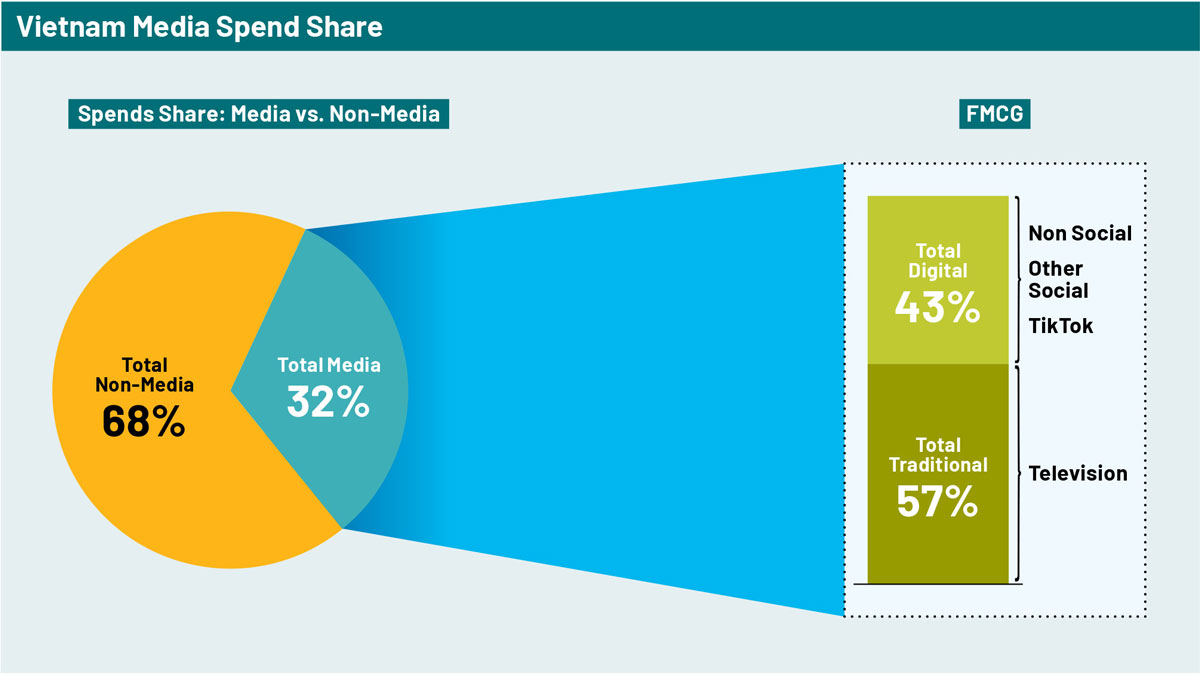
Despite these shifts, a significant “efficiency gap” remains in how brands allocate budgets. Currently, 68% of FMCG marketing spend in Vietnam is tied to non-media activities (such as trade promotions), while 32% is allocated to media. Within that media slice, television still commands the majority share followed by Digital. However, the rise of “Shoppertainment” and the evolution of TikTok Shop into one of the leading e-commerce platforms in Vietnam have turned social platforms into full-funnel engines. Consumers are no longer just discovering products; they are completing the purchase journey within the same ecosystem.
1. The Efficiency Gap: Spend vs. Contribution
The effectiveness* of a media channel is defined by its ability to deliver sales that exceeds
its cost. In Vietnam, TikTok over-delivers more than any other channel.
2. Market-Leading ROI Performance
In 2024, TikTok solidified its position as the highestperforming channel in the media mix.
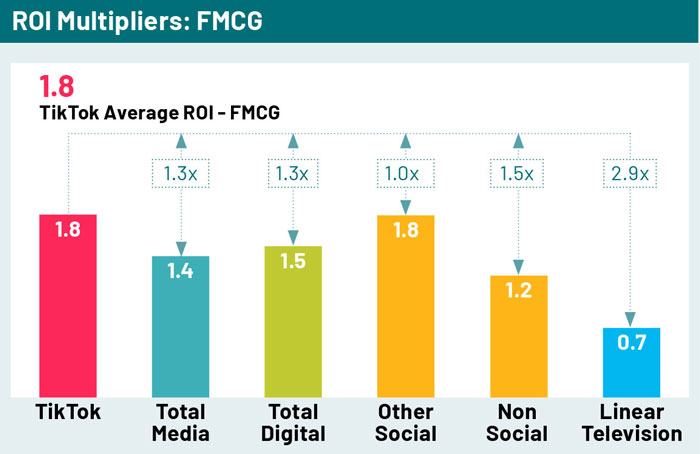
Above chart indicates the ROI of TikTok as a multiplier of other channels e.g. TikTok’s ROI is 1.3 times that of Total Media ROI.
3. The “True ROI”: The E-commerce Halo Effect
Measuring TikTok solely on offline sales ignores its primary advantage in the Vietnamese
market: Social Commerce. According to industry reports for Vietnam, the integration of
content and commerce is a key driver for FMCG growth.
*Effectiveness: Effectiveness indicates if the ads are hitting the mark with their target audience and whether they’re getting the best outcomes. For Digital, this is calculated by the formula - Incremental Sales per Million Impressions
The most impactful takeaway for FMCG marketers is the significant “under-investment” in TikTok. While most channels are approaching saturation, TikTok remains the primary area for profitable growth.
Recommended Spend Increase: To achieve an optimized media mix, advertisers are recommended to increase TikTok spend by an average of +61% (reaching up to +70% for some brands).
Budget Reallocation: Media budget optimizations suggest a -11% reduction in Other Social, which should be reallocated to TikTok to maximize the total portfolio ROI.
The Under-Leveraged Advantage: Brands that move early to fill this 61% gap will capture a competitive advantage in a market where TikTok’s contribution to sales is growing faster than its cost of entry.
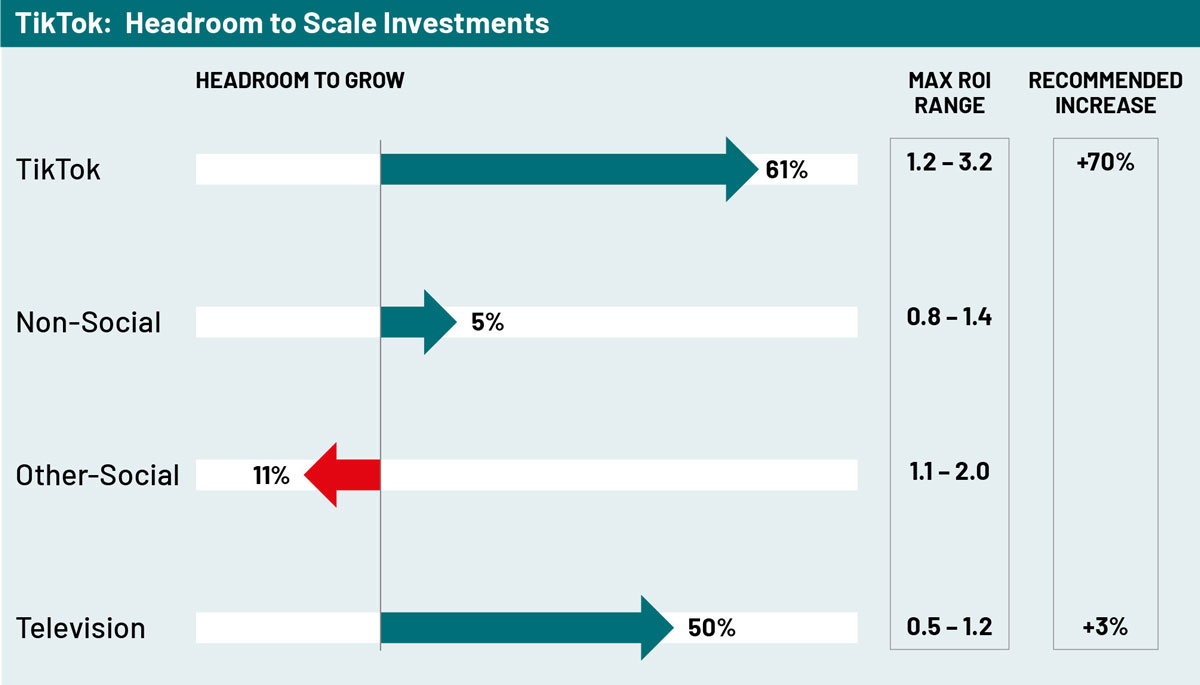
The data confirms that the current media allocation for FMCG brands in Vietnam is misaligned with actual performance. To unlock future growth, brands must pivot from a “Reach-First” strategy (anchored in television) to an “ROI-First” strategy (anchored in TikTok).
The Path Forward
1. Rebalance the Portfolio: Act on the +61% headroom identified for TikTok to improve overall marketing equity
2. Measure the Full Funnel: Shift measurement frameworks to include the “True ROI” of 2.0, accounting for the massive halo effect on e-commerce.
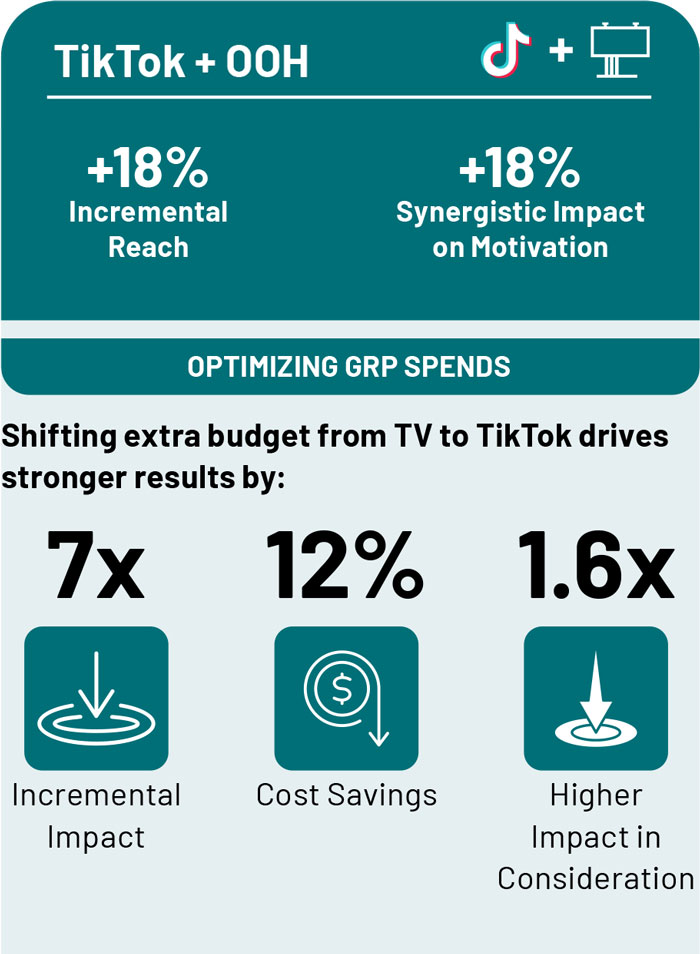
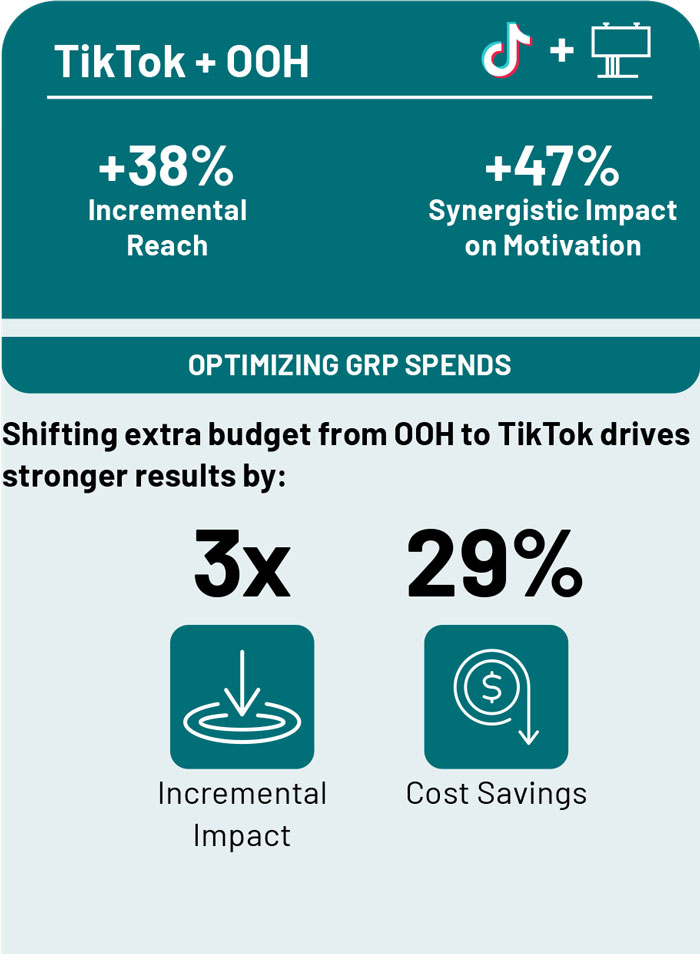
3. Optimize for Synergy: Use TikTok to inject efficiency into traditional campaigns, creating a balanced mix that bridges the gap between broad brand awareness and immediate sales conversion.
Quantifying the ROI of marketing investments is among the top challenges for CMOs.
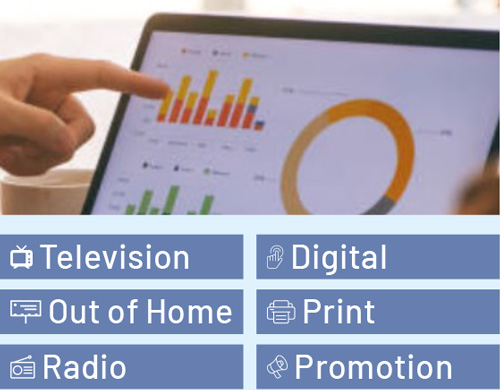
Marketing Mix Modeling (MMM) is a statistical methodology that measures the ROI of all marketing channels.
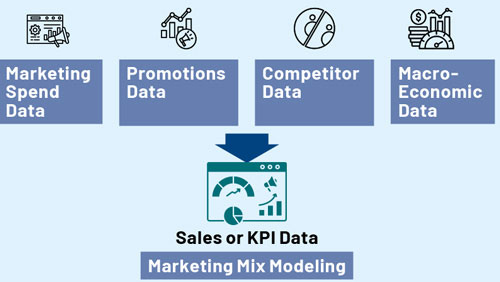
These insights are used for optimizing marketing budget to maximize revenue or profit.

Sufficiency analysis is a mechanism for identifying how your response (incremental revenue per execution) moves along with additional executions. It helps explain the optimal level of execution to achieve the maximum volume response and your saturation point.
In the illustrative example below, the guidance for businesses is to spend between Point B and C. Point B indicates the lowest cut-off point for investment while Point C indicates the investment at which ROI peaks. Ideally, the investment should hover around Point C for the best ‘optimal’ growth. Businesses may invest beyond Point C if they aim for higher growth, or for new brands, where momentum is far more important than efficiency.
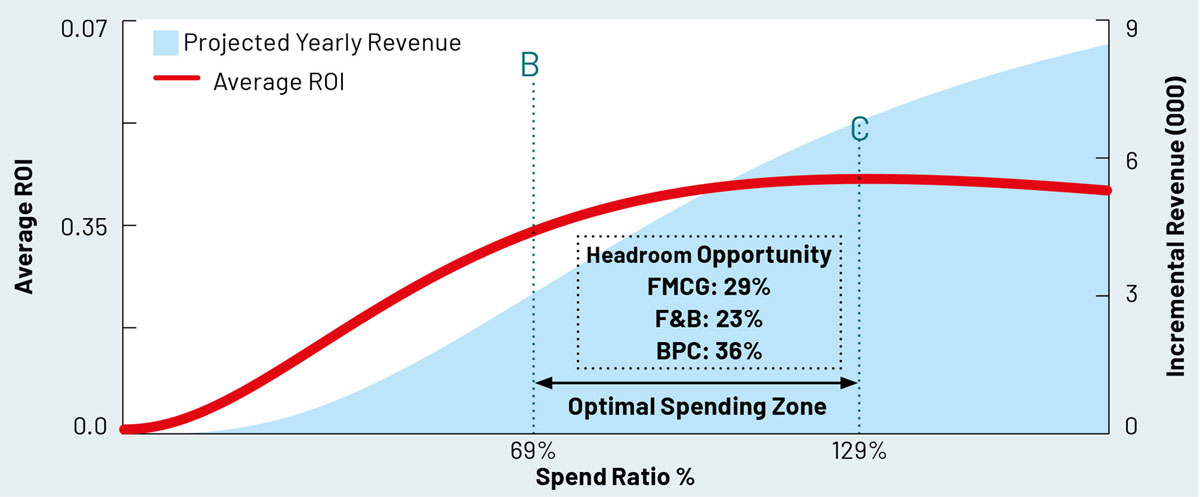
Spend Ratio %: % of spends above the current level of spends (100%)

Analytic Edge, a C5i group company, is a leading global provider of AI-powered marketing analytics and insights. The company delivers advanced, real-time analytics solutions that help brands make faster, smarter, and more costeffective marketing and sales decisions.
Through proprietary technology available as SaaS or in-house deployments, Analytic Edge offers always-on analytics capabilities such as marketing mix modelling, revenue growth management, campaign incrementality, and new product launch evaluation. Its intuitive, point-and-click software makes advanced analytics accessible and scalable across teams and markets.
With a client base spanning sectors including e-commerce, mobile apps, gaming, consumer goods, retail, and automotive, Analytic Edge supports global organizations from its offices in Singapore, India, the US, Canada, Mexico, Brazil, the UK, China, Japan, South Korea, the UAE, and Australia.
